
Introduction
In this post, I explore a forest bathing reflection on changes in the autumn forest. This year is particularly noteworthy as unusual– a mast year. A mast year is one where excessive amounts tree production of acorns, horse chestnuts, and fruit occur.
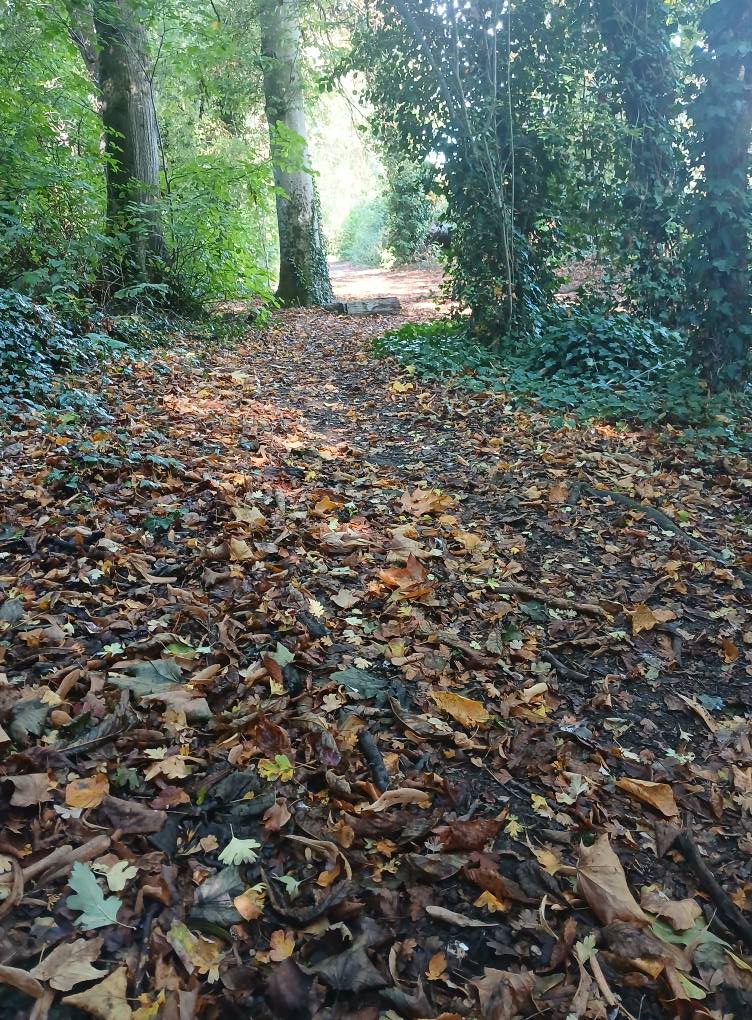
This adds the ambience of early autumn. Not only there is a developing rich carpet of leaves underfoot, and the slow but steady falling of leaves, but there is also an abundance of acorns, apples and horse chestnuts making up the forest floor carpet.
The abundance of a mast year
But mast years occur only occassionally. This means that the rich abundance of horse chestnuts, apples, and acorns is not the usual pattern of things. And in this forest bathing reflection I focus on the gifts of the mast year, what they mean in the turning of the seasons, and in expectation of the shorter days and longer nights to come.
It is also a forest bathing reflection on abundance. For whatever has triggered the mast year and the drop of fruits, acorns, apples and horse chestnuts, there is a sense of rich abundance and literal fruitfullness.

Mast years: abundance and fruitfulness
Mast years are cyclical occurences. They do not happen every year, but they do happen with a somewhat predicable regularity. A mast year might “happen approximately every two to five years.”
So while these are not an annual occurence, the rich offerings of a mast year do have their own pattern and cycle. But mast years are a fascinating phenomenon of communication in a woodlands, for it is not just a single species of trees and plants who have the abundance. Rather, a mast year is the collective abundance of a woodland, a “synchronized boost in productivity.”
The Woodland Trust comments on this marvel of nature communication: “The vast majority of trees in a particular species will have a fantastic crop all across the UK in the same year. How the trees co-ordinate this when they’re so far apart is one of nature’s many mysteries.”
Thus, a mast year offers an insight into the complex communication and networking of nature in woodlands.
The reasons suggested for the happening of a mast year have to do with possible survival strategies for the woodlands– in providing more food in the form of nuts and seeds than an animal population will eat.
This means that some of these seeding produce of the trees will survive to begin growth as a new plant in the woodland.
Weather patterns also play a role in the staging of a mast year. For instance, “[w]arm, dry springs are perfect for pollination…” However, this does not fully explain the ways in which trees organise the synchronized higher than usual production of nuts and seeds.
While there may not be clear-cut scientifically validated answers as to the ways in which this communication occurs, that it occurs is without question. This demonstrates the rich, living nature of a woodland and the trees and plants within. Should there be any doubt that woodlands are a networked, living, thriving and communicating place–the happening of a mast year should put that doubt to rest.

Forest bathing practice focused on cyclical abundance and rooted connection
So the mast year happening now offers a wonderful chance to construct a unique forest bathing reflection and practice. It is a chance to focus on the mast year, the abundance that it has brought, and what that means.
The mast year offers the gift of deepening an EarthWise journey. It is an opportunity to deepen a sense of connection with your favourite woodland, of tuning into the quiet happenings all around, and pondering the deep connections that trees and plants in the woodland have formed with each other.

Rooted and connected
Layers of this woodland connection can sometimes be visible–such as the protrustions of root systems that run deep beneath the soil, but have an occassional presence above ground. These visible roots are only a hint of the complex network that lays beneath the ground.
A moment can be taken to pause, to identify the abundance in the land. Abundance is found in the rich carpet of acorns and horse chestnuts on the floor of the woodland. It is found in the rich aroma of the woods in the autumn, particularly so in this mast year.
And a further moment can be taken to pause, to identify the rootedness and connectedness within the woodland that make a mast year possible.
Steps to building a mast year forest-bathing reflection, practice and/or ritual
Below are some simple steps to constructing a forest bathing reflection, practice or ritual focused on the mast year this autumn.
- Find a quiet place deep in your favourite woodlands where there are an abundance of nuts and seeds on the ground.
- Pause in your walking or sitting to focus on these. Notice what colours are present. Perhaps pick up an acorn or horse chestnut and feel the cool weight of it in your hands. How does it smell? What does it add to the colourful display on the floor of the woodlands.
- Pause to reflect on the rich colours around you– in the leaves, in the nuts and seeds, in the soil. If you practice barefoot grounding, carefully feel the floor of the woodland with your feet (but being mindful of anything sharp or uncomfortable, which includes fallen nuts and seeds!). While not a necessary part of forest bathing, barefoot grounding offers another way in which to connect with and focus on the complex and connected nature of a woodlands.
- Take a few moments to reflect on the meaning of abundance and communication. See what rooted connections are visible in the part of the woodlands where you are sitting, walking or standing. Imagine what connections continue underground, not visible on the surface. Imagine the whole of the woodland communicating and coordinating.
- Think about connection the place where you are doing your forest bathing. What attracts you to the particular spot that you are in? What trees are you drawn to? Take a moment to observe the patterns of their leaves, their bark, their nuts or seeds or berries.
- Take a moment to simply be present in the woodland–being part of, and not an observer of, your woodland scene. How does it feel to be part of the abundance and connection?
Conclusion
This mast year offers rich gifts from nature that speak of abundance, communication, connectedness, as well as seasonal and annual cycles. It offers a visible result of woodlands as a community that supports itself and its plant members, of their rootedness and connection. It offers you, in forest bathing, a chance to consider these once-in-awhile natural occurences of a mast year, and to reflect on their messages within your own forest bathing practice.