
Thinking about seasonal eating
This post and its subject have had a few iterations, and this is likely to be the first, and not the only, entry on the topic of seasonal eating. It turns out that it is a topic which can be taken in many directions.
There is factual content- what is in season, when, where to find it, what the nutritional values are. There is historical content, about what was growing, whether what was growing was native or introduced, domestic or escaped into the uncultivated fields and into woods. There is historical and even spiritual nostalgia linked with the modern concept of sustainability. These invite ideas of a more wholesome, simpler and better time of living in harmony with Earth, nature and its seasons in a way that was healthy for mind, body and spirit.
And doubtless there are more. This is but to scratch the surface of the concept of seasonal eating and all the variations it can entail. And this blog will aim to cover aspects of these in future posts.
The many meanings included in seasonal eating
Seasonal eating may resonate at one level as a modern health fad, a modernish concept embued with revisionist concepts of what that actually meant. Take the revisionist vision far enough back into time, and it can become linked with notions (themselves perhaps revisionist) of what spirituality was linked with seasonal eating.
So it is key, perhaps, to be aware that the concept of seasonal eating is not simply a neutral one, and as with many things, can be wrapped up with multiple layers of meaning and symbolism. And that may in part account for its seemingly wide spread popularity. But none of that is a reason to disregard the concept, or the practice, or to not explore what it means on a variety of levels.
At one level, seasonal eating is a simple concept. It is about eating what is available during its period of natural growth. Plants have a cyclical and seasonal based growth rhythm, and seasonal eating is in one straightforward sense, about eating what is available, when it is available.
Perhaps here it is worth a slight detour to note that the concept of seasonal eating is connected strongly to plant-based eating. Doubtless there are arguments that it can also be linked to eating animal derived products, as they too could be said to follow seasons of growth, birth, fattening, and hibernation, depending upon the animal. But for this EarthWise discussion, the focus will be on plants and not animal-derived foods.
Seasonal eating: going back in time
Go back into time far enough and seasonal eating was not a concept. It is just how things were. You ate what was available when it was available. Before the advent of agriculture, this would have meant gathering from nature what seeds, fruits, vegetables, roots, were at a stage where they were edible and available. There are obvious concepts, that in the summer and autumn there would have potentially been more abundance than spring, and even more limited availablity in winter. In imagining this sort of eating, what was eaten was done so soon after it was gathered or harvested. Thus, seasonal eating in this imagining also includes the idea of eating fresh food–very fresh.
People may have had seasonal migrations, moving to different parts of the landscape at different seasons, to have available food. Too, weather may have been a driving force in where people migrated and where they sheltered for a season. Rain, wind, cold, floods, heat, all would have impacted the places and times of year that any particular location was desirable or even possible, dependent on weather as a factor as much as available food sources.
Changing the landscape: Agriculture
Agriculture changed the landscape. In both a metaphorical and literal sense. Agriculture was not only about deliberate management of domesticated species of plants–of course that alone changed the entire menu of what was available in seasonal eating, and more on that idea in a moment. Agriculture however also meant that the land itself was changed. Cultivation of domesticated plants meant that fields would be ploughed, native species unwanted would be removed (given the name of weeds, perhaps an idea that did not exist before agriculture). Trees might be cleared to make space for a field with access to sunlight and space for cultivation. Waterways might be manipulated for irrigation sources to benefit growing crops. The physical changes to the landscape in these ways would of course impact on what was available– not yet thinking about what was available through agriculture.
And then there was agriculture itself. The deliberate cultivation of domesticated species of plants had a radical impact on what plant food sources were available. Agriculture is still a practice that follows seasonal rhythms and cycles. Domesticated or not, plants still follow a pattern of rooting, sprouting, blooming.
Harvest celebrations
The seasonal practice of harvest, and of the cultural practice of harvest becoming a festive event, are tied to aspects of seasonal eating brought about by agriculture. Different, new, but still seasonal and still deeply tied to the cycles and rhythms of nature. Of such importance was the seasonal pace of agricultural life that these phases became part of spiritual calendars and events– harvest festivals that include Lamas/Lughnasadh as one example.
Seasonal eating in the modern world
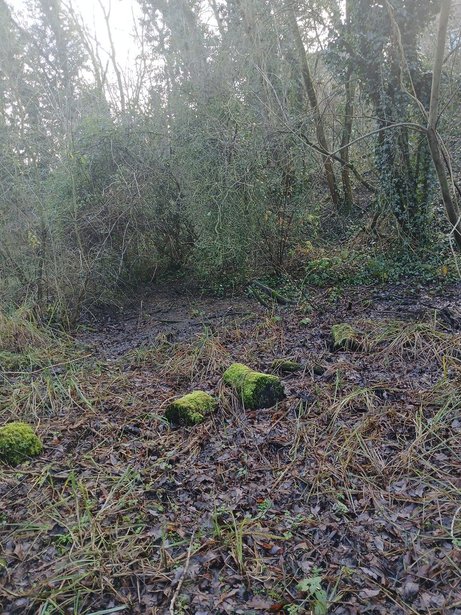
And of this circles back to a musing about what is included in a modern concept of seasonal eating. Is it about eating only what grows wild or feral, plucked from a hedge or a tree? Is it about eating what was only –so far as can be determined– original, not introduced from somewhere else? Is it about avoiding anything that has the taint of domesticity, of human interference in its development or growth? How far back in time must ideas be pushed to find what seem like the right menu for seasonal eating?
And none of this takes into consideration the impact of modern climate change. Shifting seasonal patterns can impact what can grow and when it can bloom, root and sprout. Must seasonal eating be elastic enough to adjust to what is brought about by climate change, and not be limited to a restrospective and even nostalgic ( and perhaps not entirely accurate)view of the past?
This post raises far more questions than it answers on the concept of seasonal eating. But this points out that the concept while appearing straightforward on the surface, is anything but. It remains a viable part of being EarthWise. And learning about all of the layers wrapped up in the concept add an even richer sense of becoming EarthWise when embracing seasonal eating. There will be more posts to come on seasonal eating.