
Noticing the mud
I am seated in a favourite sit spot in the woods. The overhead sound of birds is rich and full in the mid-day. Rain has stopped for the moment. I pause, looking up into the canopy of trees. In just a few days, the view has changed. The branches no longer sketch a stark skeletal line across a grey horizon. Now the branches carry the soft fuzzy appearance of new buds, with flickers of light green breaking up the previously unbroken dark browns.
Birds have appeared, seemingly overnight. The sound in the woods has changed over a few days. The birdcall is richer, more persistent, different birds winging across the sky, perching in trees, circling overhead. While the birdsong is pleasant to my ears as a clear indication that spring is now underway, I also remember that birdsong serves a variety of functions.
The canopy and the Earth
Birds might be singing for the pleasure of the warm and sunny afternoon. They might be singing to attract a mate. Or the sounds could be territorial and warning, staking out a particular area as their own, not to be invaded.
My thoughts drift upwards to the canopy and the busy life of birds that happens on levels I am not able to discern or interpret. But that is in itself deceptive. For the upwards canopy is not the only level on which a nearly secret and yet thriving life happens. Right beneath my feet is another world. It is the world of the mud, the soil, the Earth.
A unique universe
It is as much a necessary component of the woodlands as the trees and the life in the canopy. But it does not lend itself to the soaring imagery and imagination like the open sky, glimpsed above the treetops. It is just simply what is underfoot.
But to dismiss it so unthinkingly is to miss an entire unique universe.
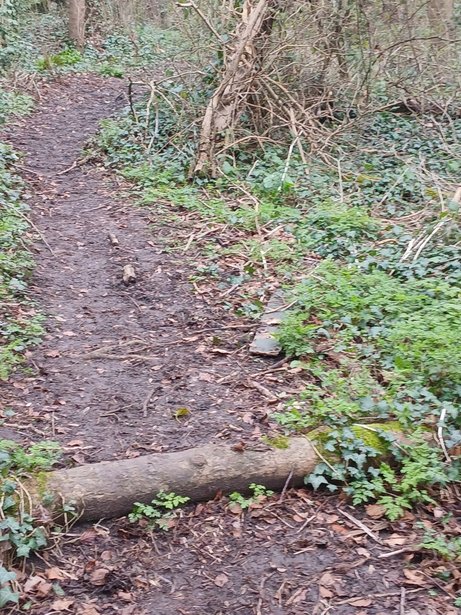
My attention drifts downwards as I walk, carefully edging around muddy spots in the track. But due to the daily rain which has been a feature since late winter, mud is impossible to avoid. It is everywhere. The mud has a particular quality like ice-deceptively slippery. But at the same time, it is sticky, grabbing onto shoes in such a way that traversing the mud requires more than my absent attention if I wish to not fall.
Coming to life
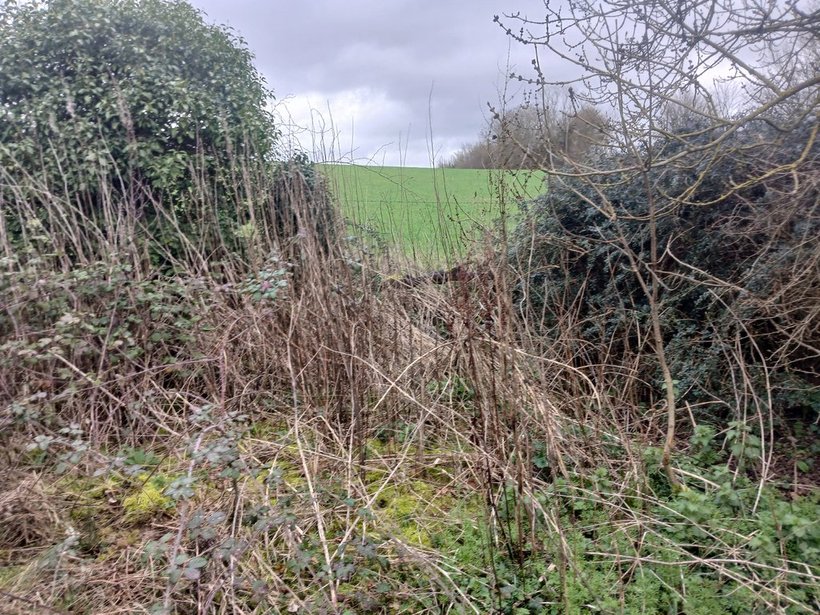
Spring is no longer a nascent idea. It is vital and alive right at my feet, in the mud. The mud is more than inconvenience that clings stubbornly to my shoes when I return from an outdoor trek. It is the very life spring of the woods. On top of the soil, this morning, there are ladybirds crawling in solemn concentration over the young green growth. Here and there knobs of ancient tree roots burst to the surface, giving a hint of the deep complexity beneath the dirt.
Below the surface, hidden from my gaze, is another world altogether. There the mud and the dirt is the ceiling rather than the sky. Intricate networks of roots, of growth, of subsoil creatures and plants, live in their own rhythm and community. This is the vital source of all that is seen above the surface, on the dirt and higher, all the way up to the canopy which frames the sky.
I sit now, watching the ladybirds at work. My attention is now longer riveted upwards, but now at my feet, wondering and pondering at the mud beneath my feet. I marvel that it is there, and all that it contains. And all that is hidden beneath. Studying the mud, I know it is the substance that brings the woods to life in the spring.