
Introduction
Who would not want to find a way to time travel back to an era of interest? What if such a thing were possible? I have an admittedly strong fascination with the Neolithic, Bronze Age and Iron Age in the British Isles. The idea of a day of time travel would be tempting. Perhaps one day would be long enough– for there is likely much about going back in that time that would seem ardous, unfamiliar and difficult to navigate. Language would be one issue. But beyond that, if a single day of time travel (with a guaranteed return trip to the present) were on offer, what would that be like?
Avalon Marshes Centre
For anyone with a good imagination, a visit to the Avalon Marshes Centre offers the next best thing to a day of time travel. There are several eras to picque the imagination and curiousity– with a range of buildings from an Iron Age Roundhouse, to a Roman villa, to a Saxon longhall. These are all worth a lingering visit and a wander about inside. But–for the time traveller to the Neolithic Age, something else awaits– and that is access to the Sweet Track.
The Sweet Track
As we start the journey, some interesting questions arise. Why walk? Would it not have been much less effort to take some kind of boat across the marshes? Coupled with the effort of building the track, then, where the track was leading and for what purpose become important. Was this more than a simple walk way for convenience? Was it only convenience that drove the creation of the Sweet Track? Or was there something more significant about the two points it linked?
Understanding the Sweet Track
The name of the “Sweet Track” is a memorable one. But it has no connection to its original purpose or to its Neolithic origins. The name itself is a modern one. The track is named for Ray Sweet, who re-discovered the preserved structures of this track in 1970.
What is it that was discovered? And what is it that we are walking along? The track itself is and was a long raised wooden platform. It is not a long-distance track. Covering only 2 kilometers, it offered a way through the Avalon wetlands. The Sweet Track linked two distinct points, providing a way across the “reed-swamp that separated the island of Westhay from the dry land of the Polden ridge to the south.”
The Sweet Track “was built in the spring of 3806 BC.”
In simple terms, then, its function is clear. It was a way to navigate to two higher points of land. But why these two points? And was the Sweet Track more than just a functional construction? Did these two points or indeed the Sweet Track itself have any further or deeper significance beyond functionality in crossing the wetlands?
A sacred meaning to the Sweet Track?
Commentary at this video on the Sweet Track suggests that there could have been a sacred or spiritual component to it. This is based on finds that might have been deposited or thrown into the marshy wetlands alongside the track platform.
Life in the Avalon Marshes in the Neolithic
What was life like in the Neolithic Avalon Marshes in the Neolithic? Prior to the creation of farming communities, the area would have been home to communities of hunter-gatherers. This video provides insight into what the landscape would have looked like, with salty reed marshes and small elevated islands of dry land.
The Sweet Track was built when there was a wholesale change in culture and technology. Its construction dates to when “farming and settled life was just beginning.” However, there is some suggestion that the two high points linked by the Sweet Track were still used as “hunting bases” by the communities now changing to farming. Hunting then did not entirely vanish as part of subsistence and life style.
In our time travel then, we have come to a dynamic and changing period of time and way of living. The Sweet Track is emblematic of this change– something built to serve the communities that were no longer hunter-gatherers but among the first to take up farming based life in permanent communities.
Changing societies, changing landscape
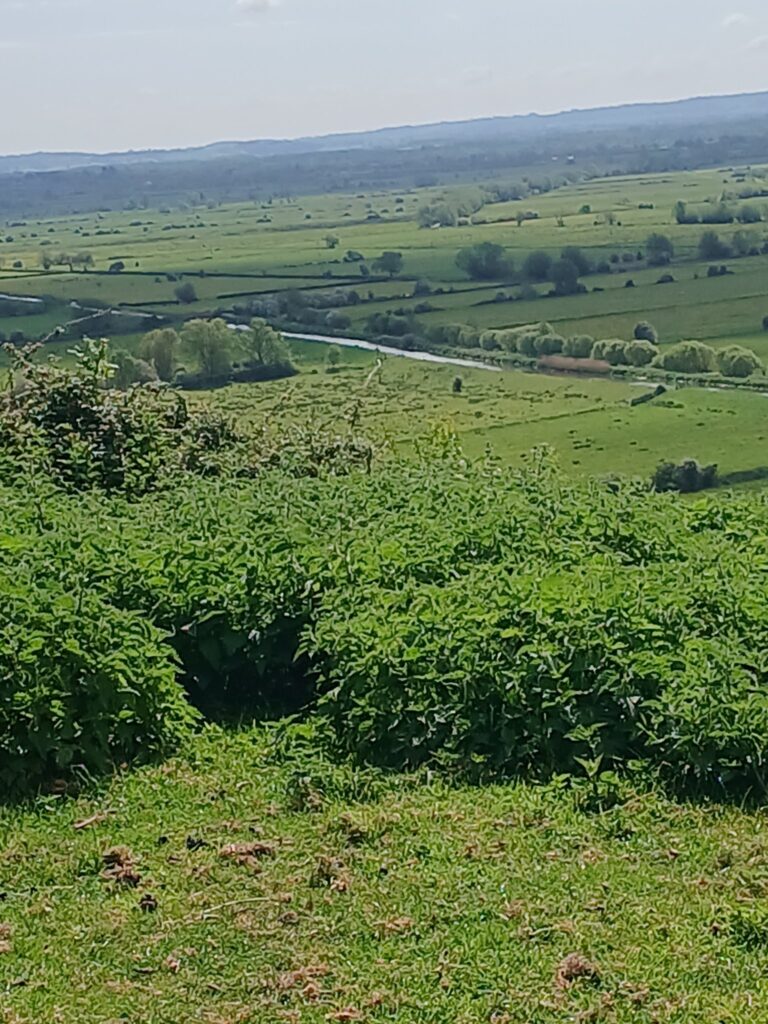
It is not only the life style of communities that was undergoing change. The landscape itself of the Avalon Marshes has been undergoing change. Today, there are vast swathes of flat green land in what is known as the Somerset Levels. These have been drained over time. The landscape would have been very different in the era of the Sweet Track.
It is worth keeping in mind that the landscape of this area changes over time, both through the intervention of humans and the changes of nature and climate.
Changes to the reed swamp landscape occured as vegetation grew and died. Gradually, “as the peat layers built up, brackish water was replaced by fresh water, and sedges and mosses started to colonise. Eventually trees such as alder, willow, birch and even oak grew on the drier areas and gradually replaced the reed-swamp.”
Conclusion
The reed swamp landscape known to the communities that built the Sweet Track would not last. The environment would continue to change, and the utility of the Sweet Track would diminish. Environmental changes in the Iron Age made for a less dry area, and “dugout canoes replaced track-ways as the main method of transport.”
What we have seen on this brief Neolithic time travel is a society and landscape in flux. There is a monumental shift from a nomad life style to that of farming, although hunting remains part of the lifestyle. We see glimpses of spiritual significance to the wetlands, although ritualistic offerings into water become pronounced in later eras such as the Bronze Age.
Life was changing as the landscape changed. There are hints of spiritual connections with water and a practice of making offerings into the water. There are practical considerations such as reaching dry points of land across a watery landscape.
Communities had to be EarthWise in a changing natural environment as well as a changing social one. The development of offerings into the watery environment suggests a changing and developing appreciation of an EarthWise connection on many levels. As farming developed, the relationship with both land and water would also undergo changes.
Thus, there are many glimpses into what life would have been like. But there also remain gaps in knowledge, questions, and places where it would be fascinating to know more.
Our next destination takes us forward in time to the Iron Age, and the lake village in the area. Here we can continue to explore what life was like. We can see what has changed and what has not. The practical and spiritual aspects of life can be explored side-by-side as we travel to the Glastonbury Lake Village and surrounding settlements.
What would you like to see in our time travel? Leave your thoughts in the comments below! We would love to hear from you.